Evaluation Infrastructure Costs in Document AI Pipelines
Evaluation infrastructure is a permanent cost layer most vendors leave out of Document AI quotes.
Document AI budgets usually price three things: build, inference, and maintenance. Evaluation infrastructure is the fourth category, and vendor quotes routinely omit it. It is a permanent cost layer with its own labor requirements, its own recurring spend, and its own failure mode when skipped, separate from build cost, inference cost, or maintenance cost.
Evaluation as a structurally distinct cost layer, not a phase of testing
When a team scopes a document AI pipeline, the conversation tends to stop at two numbers: what it costs to build the thing, and what it costs to run it per month once it's live. Evaluation infrastructure sits outside both. A labeled evaluation set, a corpus of real documents paired with the output the pipeline should produce, has to exist before anyone can say what "accurate" means for this pipeline on these documents. That set can't be borrowed from a generic benchmark, and it can't be built by the engineering team alone, since the people who know whether a field was extracted correctly are the people who understand the documents, not the people who wrote the extraction code. Testing checks whether code runs, while evaluation checks whether the output means what it's supposed to mean, and that second question needs a different kind of labor.
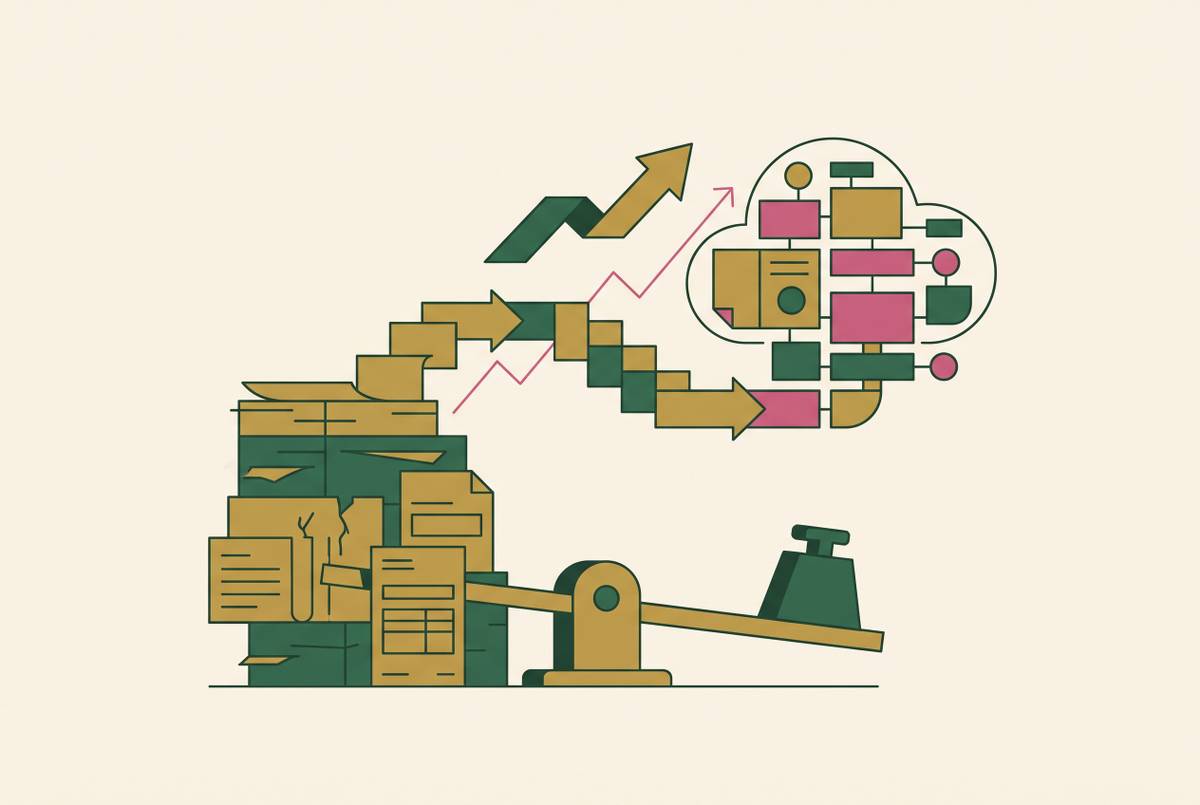
The cost also doesn't stop once the set exists. Document types shift, form layouts change, and new vendors send new formats, so an eval set you build in January measures something slightly different by the following January. Build cost is a number you pay once. Evaluation cost is a number you keep paying, and the two behave nothing alike on a spreadsheet.
Skip it, and the risk isn't visible until it's expensive. A pipeline can shine in a vendor demo against clean PDFs, but then it can lose accuracy quietly once production sends it messier documents. If you don't build instrumentation for exactly this purpose, nobody notices the drop until a customer complaint forces the question.
Labeled dataset construction cost and the domain expertise it requires
Building the evaluation set itself is knowledge work, not engineering work. The people doing it need to understand the documents in front of them, what each field is supposed to contain, and what counts as an acceptable answer when the document is ambiguous, handwritten over, or missing a page. Annotators with that kind of domain background cost more per hour than generalist labelers, and they move through documents more slowly, because the judgment calls take longer than the data entry does.
The cost also scales with how messy the documents are. A clean, printed invoice is quick to annotate. A scanned receipt with a handwritten correction scrawled across it takes longer. A financial statement with footnotes that cross-reference three other pages takes longer still, because the annotator has to hold the whole document in mind to judge a single field correctly. Industry cost breakdowns put data collection and preparation at 15 to 25 percent of total project cost, and annotation costs inside that range swing hard based on how much domain expertise the task demands, with specialized domains like finance, healthcare, and insurance costing the most.
The scope involved is not small. Annotating a large sample set can run into the tens of thousands of dollars on its own, and tasks that require deep subject-matter expertise push well past that figure. There's a scheduling cost layered on top of the dollar cost, too: a domain expert's time is scarce and shared across other responsibilities, so getting their hours on the calendar delays the eval set, which delays any honest read on accuracy, which delays the actual decision about whether the pipeline is ready to ship. Money is only half of what this costs; nobody budgets for the time it takes.
How the demonstration bar and the production bar diverge
A pipeline can clear what's sometimes called the demonstration bar by producing one correct answer on one representative document, while still failing what the production bar actually demands: sustained accuracy across the full range of documents the pipeline will see, reproducible results, verifiable attribution back to the source, and a confidence signal that actually means something when it fires.
That gap is visible in research on document-heavy financial-services workflows, where a majority of configurations cleared the demonstration bar but fewer than six in ten cleared the production bar. A sizable share of workflows that look like they work in a pilot fail once they're held to production-grade evaluation. Document quality drives that failure more than which vendor built the pipeline. Accuracy drops as documents move from clean, digitally generated files to scanned copies to low-quality scans with handwriting or noise, and a real production document set holds all three at once, not just the clean end.
This matters directly for budgeting. If the only documents being evaluated are clean ones, which is the default outcome when no domain-specific eval set exists, the number being measured is the demonstration bar, not the production bar. The space between those two numbers is risk that the project has not priced in.
Confidence scoring is one way architects respond to this problem: a numerical signal attached to each output that flags low-confidence extractions for a human to check before they feed downstream decisions or other automated agents. That signal only means anything if it's been calibrated against a real eval set, built on the documents the pipeline actually encounters. Without that calibration, a confidence score is just a second unverified number sitting next to the first one.
Static benchmarks versus domain-specific eval sets
A team that wants to skip building its own eval set often reaches for a public benchmark instead, on the logic that someone else has already done the labeling work. Public document AI benchmarks exist for a different purpose: comparing providers against each other on a shared, academic basis, not measuring how a specific pipeline performs against the specific document types and field distributions it will meet in production.
OmniDocBench, presented at CVPR 2025, is a clear example of the gap. It covers four major document components, text, tables, formulas, and reading order, and it's a serious piece of benchmark construction. But only a small fraction of its pages are enterprise documents, a limitation the field recognizes openly. A benchmark built mostly from academic and general-purpose documents doesn't tell a buyer much about how a pipeline handles, say, insurance claim forms with inconsistent layouts or medical intake documents with inconsistent field names.
There's a related structural problem when vendors publish their own accuracy numbers: those numbers come from documents the vendor's own parser was built and tuned to handle well. That's not a question of honesty; it's a question of what the test was ever designed to measure. Testing against a single access method, or scoring only one response per prompt, leaves out most of the variance a pipeline actually meets once it's deployed across a real document stream.
The right question to ask a vendor quoting a single accuracy figure is which fields, which document types, and whose test set produced that number, because accuracy tracks document quality far more than it tracks which vendor built the system. If a team makes decisions off a vendor's published benchmark, it is measuring that vendor's best-case document set, not its own production distribution. The space between those two is precisely what a domain-specific eval set is built to measure, and no public benchmark can stand in for it.
The recurring costs that accumulate after the initial eval set is built
The eval set isn't a one-time asset that sits on a shelf once it's built. Document distributions move as vendors change, form layouts get redesigned, and regulatory requirements shift, so an eval set left untouched soon stops reflecting how the pipeline performs in the world. Keeping it current is ongoing work, not a closed project.
Running eval checks inside continuous integration carries its own recurring API bill. Teams that run serious evaluations on every pull request report that CI eval alone consumes a real chunk of their monthly API spend, a cost smaller teams tend to skip early on and then pay for later, in the form of regressions nobody caught before they reached production.
Industry figures put the annual run cost of an AI system at 20 to 40 percent of what it cost to build, and data preparation, evaluation, drift monitoring, and change management together often equal or exceed the build cost on their own. Pipeline maintenance adds another layer on top of that. Fivetran's enterprise data infrastructure benchmark report found that enterprises spend a substantial share of their engineering time just keeping data pipelines running, and that pipelines built in-house or on legacy tooling break far more often than modern alternatives do. Each break causes downtime, and that downtime delays the eval loop at the same time it delays the production pipeline itself.
Schema changes land as sharp, one-time shocks inside this slower-moving cost picture. A single schema change inside a document extraction pipeline has been reported to spike inference costs by thousands of dollars in one month. If no eval harness is already in place to catch it, that same schema change degrades accuracy quietly, since nothing in the system is built to notice. A team that only budgets build cost and inference cost meets evaluation, drift, and maintenance costs one at a time, as unplanned surprises. Each surprise is defensible on its own. Together, they change the total cost of the project substantially.
Regulatory compliance and the mandatory audit trail
If you build document AI in healthcare, finance, or insurance, evaluation infrastructure stops being optional the moment regulation enters the picture. Article 15 of the EU AI Act requires high-risk AI systems to reach appropriate levels of accuracy, robustness, and cybersecurity. Performance has to meet a standard fit for the system's actual purpose, and it has to stay consistent even when the system meets inputs it wasn't expecting. A maintained eval harness demonstrates both of those requirements continuously, through ongoing measurement.
The documentation burden this creates is what turns eval infrastructure from a good idea into a legal obligation. Regulators expect documentation that reflects what's actually running in production at the moment of an audit, not what was true when the system launched. A model card that was accurate in the first quarter doesn't satisfy an examination conducted in the third, because the pipeline, the documents it's seeing, and its accuracy against them have all likely moved since then.
The penalties attached give this real weight. Fines for prohibited practices under the Act can reach up to €35 million or seven percent of global annual turnover, whichever is larger. Measured against that, the cost of building and maintaining proper eval infrastructure looks cheap by comparison. For regulated industries, the real question is how to build eval infrastructure once, so it satisfies engineering accuracy requirements and audit evidence requirements at the same time, rather than building two separate systems for two separate audiences at roughly double the cost.
The fully-loaded eval infrastructure budget before the build is signed
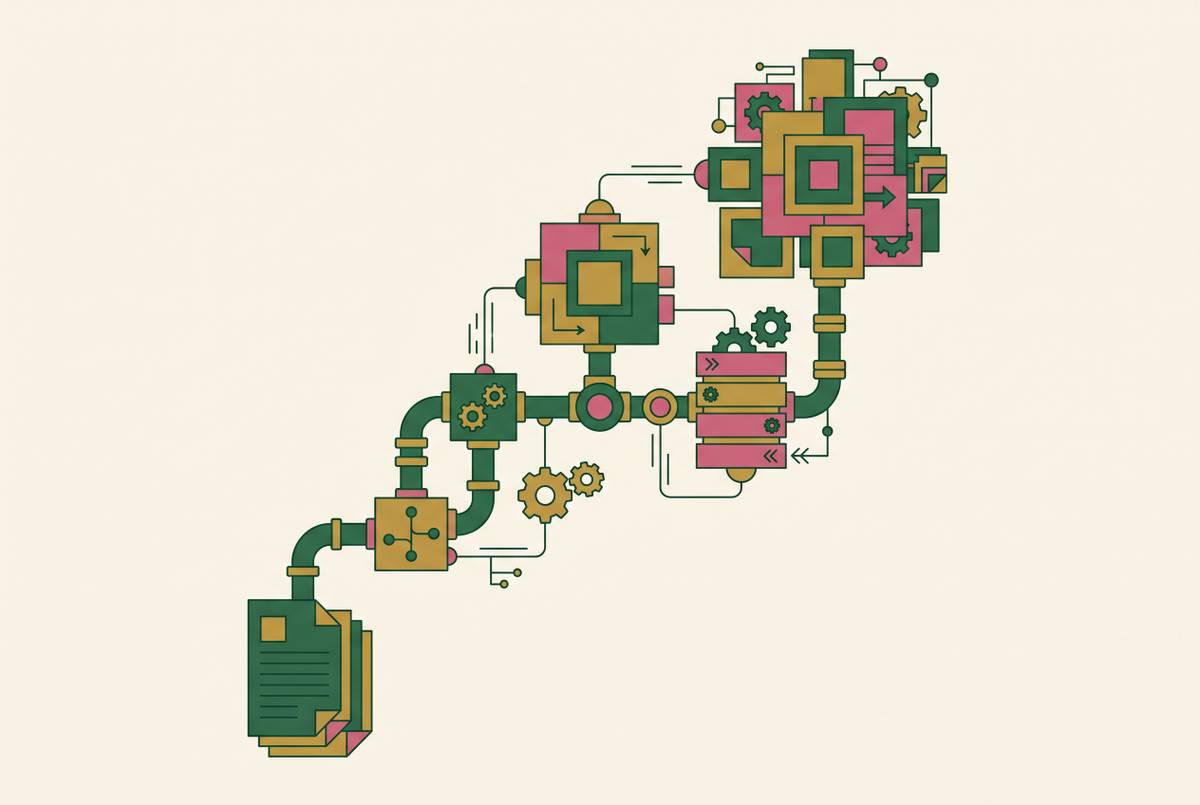
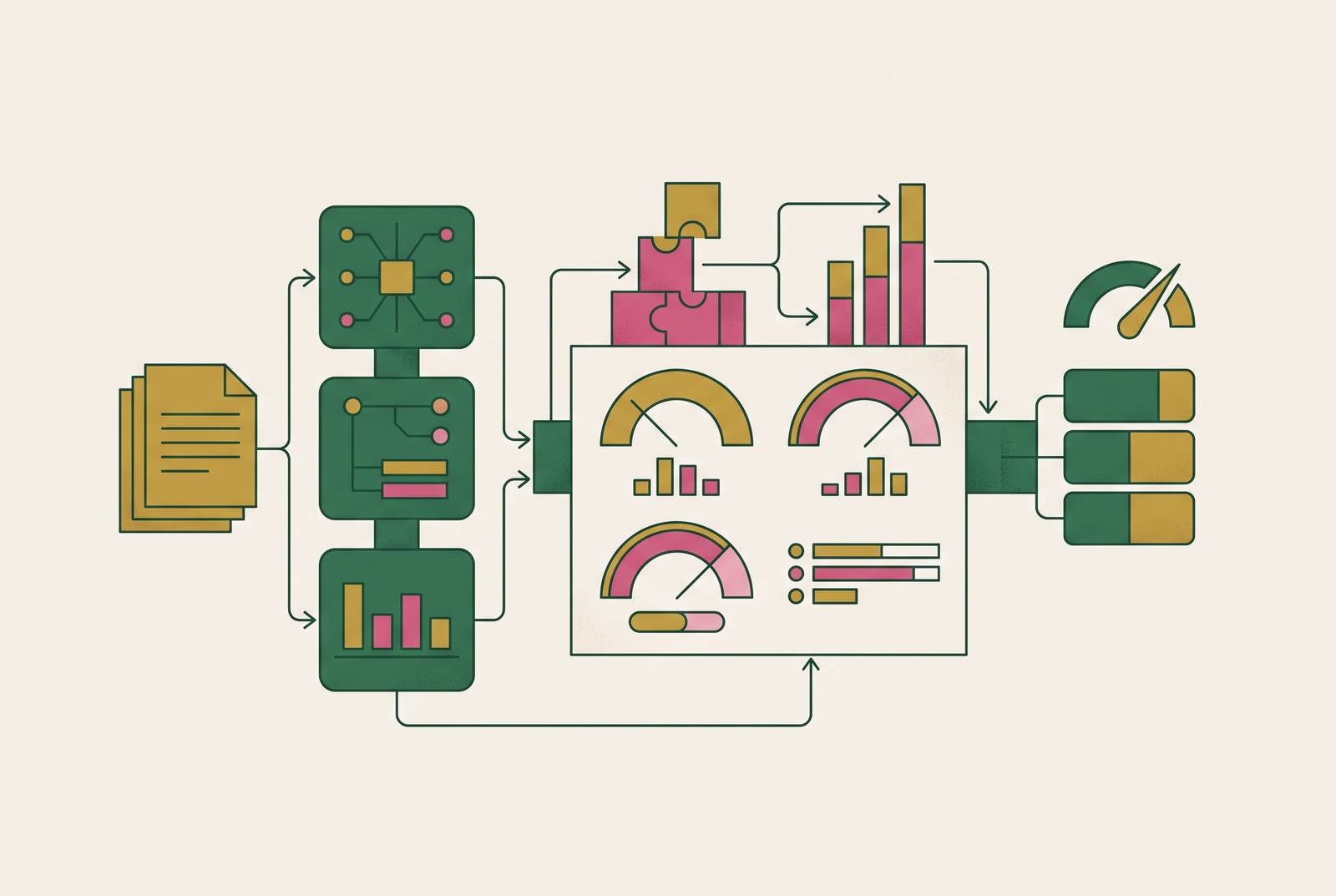
Evaluation infrastructure isn't a single line item, and treating it as one is where most budgets go wrong. At minimum, it breaks into four parts: labeled dataset construction done by domain-expert annotators, benchmark maintenance and refresh as document distributions shift over time, CI eval runs that carry a recurring API cost on every pull request, and drift monitoring that runs as ongoing operational overhead once the pipeline is live.
Each of these four scales on its own axis. Dataset construction scales with how complex the documents are and how much domain expertise they demand. CI eval cost scales with how often the team deploys and how many model calls each eval run makes. Drift monitoring scales with how many document types and fields are in scope for the pipeline overall. A team that prices one of these and assumes the rest follow the same curve will misjudge the total badly.
The usual mistake is pricing the build and the inference, then meeting evaluation, maintenance, and compliance costs later as change orders nobody planned for. The more defensible approach treats evaluation as its own cost layer from the start, estimated in parallel with the build.
Three questions produce a workable estimate before any contract gets signed. Which document types and field distributions will the pipeline actually meet in production, since that sets the scope of the dataset that needs building. What accuracy and confidence thresholds do downstream systems need before they can act without a human checking the work, since that sets how rigorous the eval has to be. And what regulatory reporting obligations apply to the industry in question, since that sets what the audit trail has to contain. Teams that build this kind of observability into the pipeline from the start, and run structured evals rather than one-off spot checks, report far more confidence in how their systems hold up at scale. The investment in evaluation infrastructure functions as insurance against exactly the kind of scaling failure that teams without it tend to meet first in production, and worst, in front of a customer or an auditor.