Schema Drift in Long-Running Document AI Pipelines
Contracts and output validation catch schema changes that silent pipelines otherwise hide.
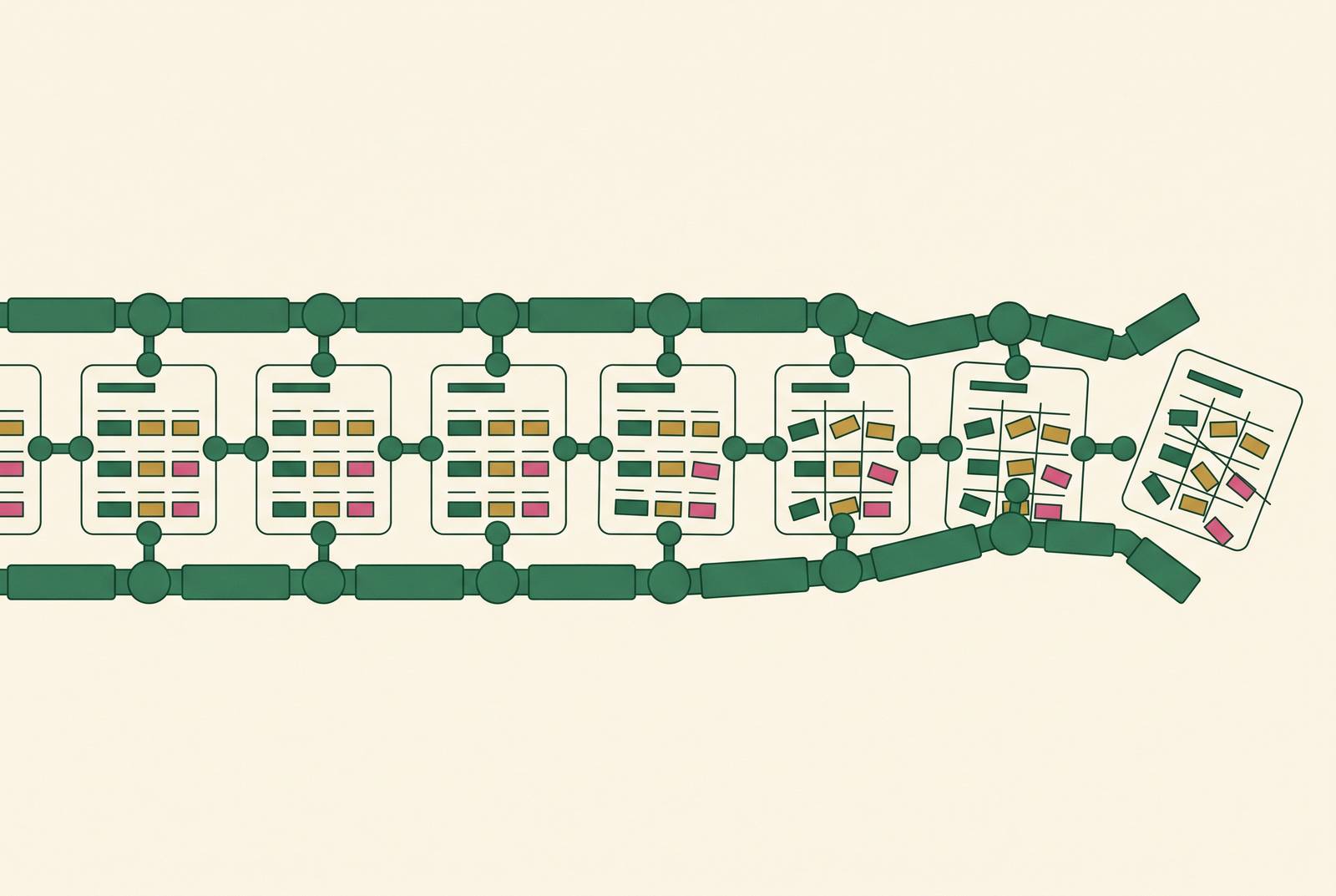
Schema drift in long-running document AI pipelines is an infrastructure and observability problem. Changes in document structures and model behavior can corrupt outputs while the system reports that it is healthy. The durable defense is to make those changes detectable through contracts, output validation, and document-level monitoring built into the pipeline.
Why document AI pipelines fail differently than other data systems
The team sees worse answers and assumes the model has degraded. Retraining or replacing it seems like the direct response, but the failure may sit in the data infrastructure that feeds it. A changed field, broken join, or change in input structure can make answers worse while the pipeline keeps running. The first diagnostic distinction is between a model that performs poorly on valid inputs and a pipeline that no longer supplies valid inputs.
Traditional BI systems often expose schema breaks through an immediate disruption. A dashboard goes blank, and someone files a ticket. An AI pipeline can instead keep generating responses from damaged inputs, leaving no obvious interruption to investigate. Row counts, runtime, and error rates can all look normal because none checks whether the data still means what downstream systems expect it to mean.
Consider a user_id column that changes from numeric to UUID format. A join silently drops a large share of records, leaving the model to train on a biased subset. No alert fires because row counts look close enough to their expected range. The pipeline has succeeded operationally while failing semantically.
The two distinct forms of drift a document pipeline must defend against
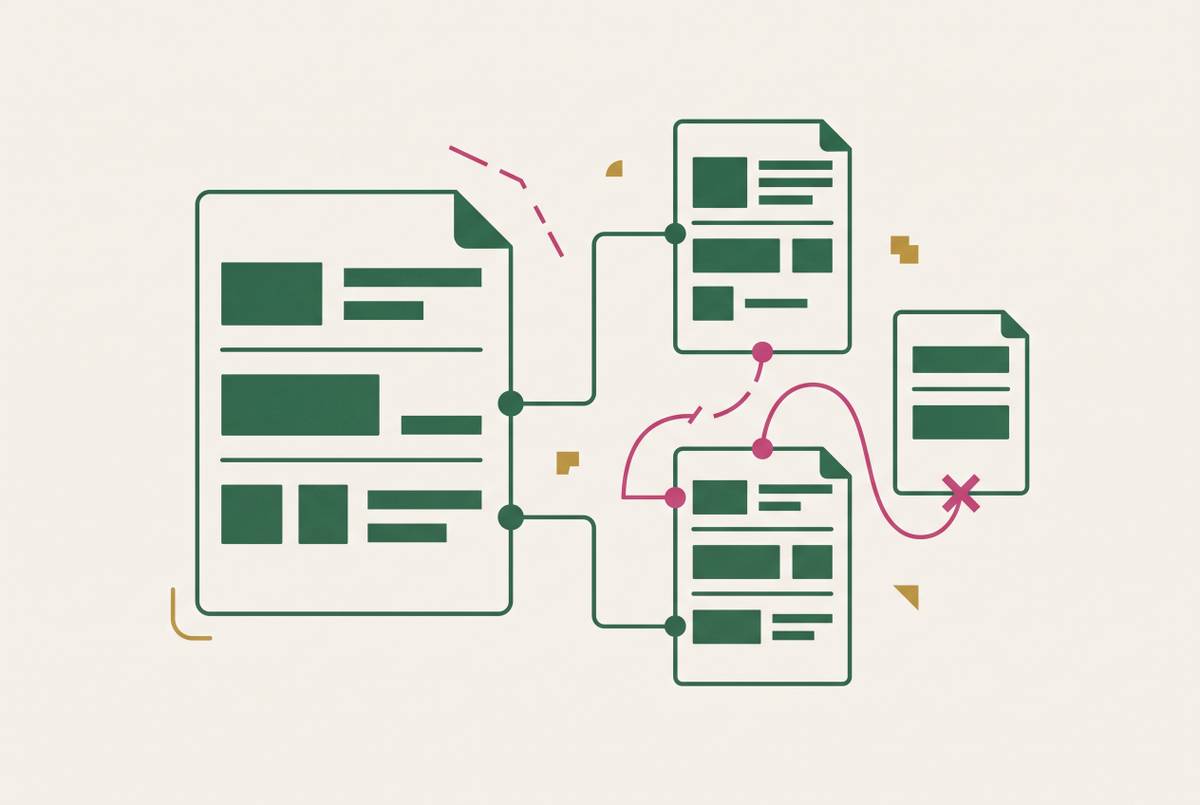
Source-side structural drift begins when upstream documents change without notice to the pipeline owner. Vendor invoices, EHR forms, loan applications, and shipping manifests can acquire different field names, data types, or layouts. Where documents arrive through APIs, the gap can also appear between the actual response and the artifacts that describe it. Implementation drift means the server returns something the schema does not describe. Reference drift means the published API reference lags the schema, while client drift means SDKs lag it and multiply the gap across languages.
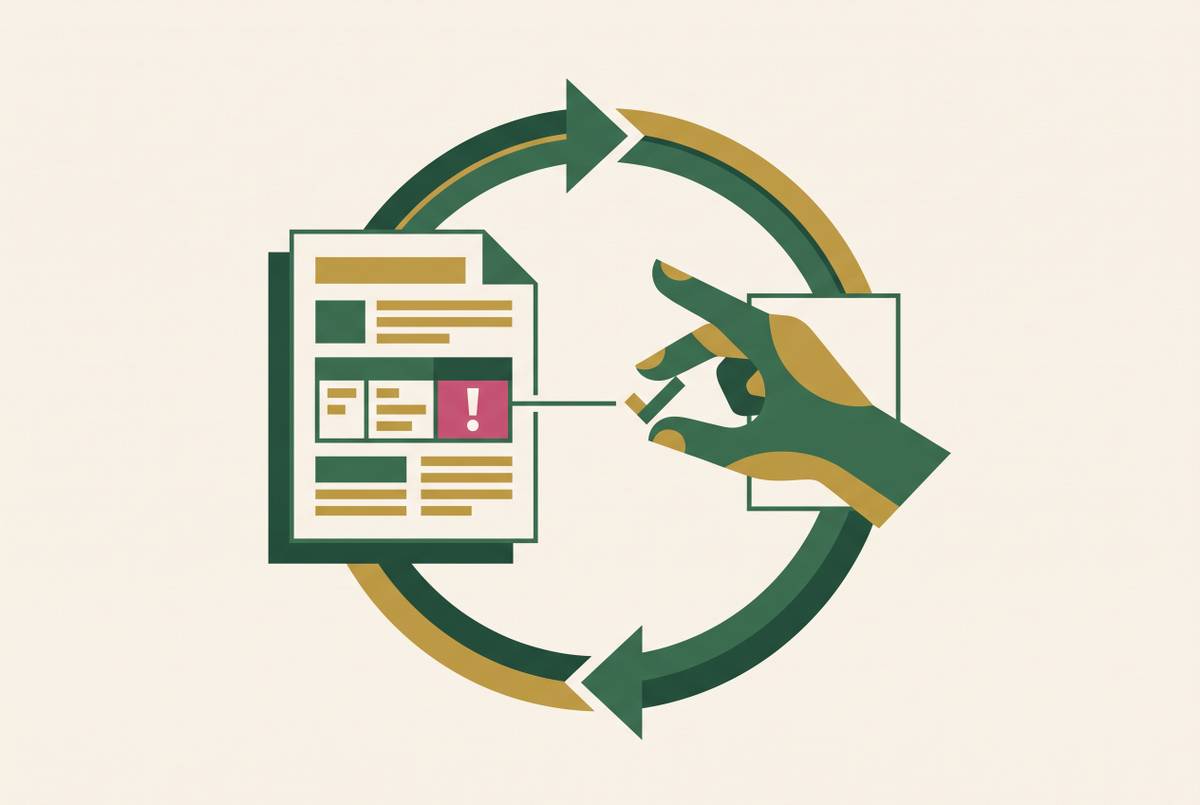
Narrative drift affects hand-written quickstarts and inline code samples that nothing regenerates. It is especially hard to catch because tests may not cover what developers read first. Updating only the reference still leaves developers at risk of using outdated material on their first run. These gaps also accumulate unevenly because new capabilities create demand for documentation, while subtractive and corrective changes attract less attention.
Model-side output drift has a different origin. A provider silently retunes an LLM or parser, and outputs change even though the pipeline owner has changed no code. Sensitivity depends on the task, with structured tasks such as SQL remaining stable under conditions where RAG tasks drift substantially. Larger models do not necessarily provide greater consistency, so scale cannot stand in for behavioral testing. The two forms can compound when a revised document layout reaches a model whose output behavior has also shifted, requiring separate detection at the input and output boundaries.
Why accuracy numbers from benchmarks and pilots do not predict production drift behavior
A benchmark measures performance on the documents it contains. Clean, static test sets leave out much of the inconsistency found in production data managed by different teams under different standards. A model can consequently perform well in a pilot and degrade when the full data distribution arrives. That gap explains why drift defenses often feel like remedial work added after the original design. The deployment score answered a narrower question than the production system needed answered.
A model can extract the vast majority of fields correctly while still making at least one mistake in a significant share of documents. Production workflows need document-level correctness to clear a meaningful threshold, even when the average across individual fields is high. A field score therefore cannot substitute for an assessment of whether the document is usable as a whole.
Layout interpretation and text extraction can each fail even when the other works. A model that does well on printed text can still be unreliable on handwritten or degraded inputs, where results can vary widely. The vendor may revise the invoice template, or the EHR form may gain required fields after deployment. A benchmark taken at launch says nothing by itself about accuracy six months later, because it does not test the pipeline’s ability to detect those changes.
How multi-system pipelines turn a single schema wobble into cascading failures
A document processing stack passes assumptions between systems as well as data. When no boundary establishes which schema is authoritative, each downstream layer can accept a structure that has already become incompatible with its expectations. Even after the final output is fixed, the same bad input can still reach other consumers. The defensive control has to sit before the point where the changed structure spreads.
Ingestion is exposed to more than renamed fields. Missing fields, corrupted records, and delayed labels can also undermine the data supplied to later stages. Gates at this boundary therefore need data validity checks and distribution diagnostics alongside row counts and runtime. AI pipelines must catch the changed structure before it reaches the index. Waiting until generated answers shift allows the fault to pass through the very boundary that should have contained it.
Modyn frames the broader challenge as data-centric ML pipeline orchestration. Its premise is that production datasets keep growing and models must incorporate new training data to adapt to distribution shifts. A pipeline with a fixed design is a poor fit when the data keeps changing. Accepting new data requires an explicit authority at ingestion to define valid data through a contract that downstream systems can depend on.
Data contracts at the ingestion boundary as the first structural defense
A data contract makes an existing assumption testable rather than adding bureaucracy to an otherwise assumption-free system. The pipeline already depends on column names, types, nullability, and meaning. A contract sets out those expectations, including units, grain, and enum domains. It also specifies maximum staleness and expected row counts. These terms establish what the boundary will accept before data can enter the index or model layer.
Enforcement makes an incompatible write immediately visible, preventing an invisible downstream error. Responses can be tiered so that critical violations fail, tolerable ones lead to quarantined rows, and both produce violation counts. This preserves a continuous signal without treating every deviation as equally severe. The contract also names an owner and defines versioning and a deprecation window, making upstream changes subject to a negotiated transition.
For API-delivered documents, the same principle extends to documentation and SDKs. Both should be derived from one versioned API definition, with CI failing when a definition change is not reflected across the dependent artifacts. Available tools cover the necessary checks, including Spectral for linting, oasdiff for breaking-change diffs, and Pact for consumer-driven contract verification. Checks need to block a merge. Hand-written integration material needs schemas from the authoritative definition embedded in its prose and pipeline configuration so that narrative drift does not keep an outdated contract in use.
Catching model-side output drift before it corrupts downstream agents
An ingestion contract cannot prevent a model from changing how it interprets valid documents. The output boundary therefore needs structural and behavioral validation on every run, even when the model version is pinned. Structural checks reject malformed JSON, enforce field types, and flag hallucinated enum values before downstream agents consume them. These checks establish whether an output has the required form. They do not, by themselves, establish whether its contents are reliable.
Calibrated field-level confidence supplies the runtime signal for that second decision. Configurable thresholds can route a document to automated processing or flag it for review. Calibration matters because a model can report high confidence while being correct much less often than its score implies. Per-task baselines are also necessary because structured extraction and RAG-style tasks do not share the same sensitivity to change.
For major model version bumps in high-stakes verticals, shadow deployment is the appropriate default. The new version runs in parallel against live documents, and promotion depends on whether its behavioral difference from the pinned version stays within tolerance. Runtime routing provides a separate safeguard when classification or parsing fails. Fallback to legacy OCR systems or a manual web portal lets the workflow degrade gracefully and avoid delivering unreliable extractions. Autonomous agents need this bounded autonomy because an incorrect extraction can otherwise pass directly into classification, validation, or routing without a human checkpoint.
Making the pipeline observable: what to instrument and where
Contracts and confidence thresholds become operational controls only when they leave a continuous, queryable record. At ingestion, monitoring should track field presence rates, type consistency, and enum coverage over rolling windows. These measurements reveal changes that a per-run pass or fail can conceal. Violation counts should include tolerable failures as well as critical ones. When tolerable violations become more frequent, they can reveal drift before it crosses the failure threshold.
At extraction, per-field confidence distributions can reveal declining certainty for a particular field type even when the pipeline-wide average appears stable. The audit log must then preserve the full extraction decision, including the model version, raw output, assigned confidence score, and routing outcome. This record connects the input, model behavior, and decision to automate or review. It gives debugging and compliance the same evidentiary foundation.
Data lineage documentation must show where training and inference data originated and who certified it. Model certification records must include evaluation suite results and known failure modes. Access control logs establish the record of access, while incident and drift records show how degradation was detected, investigated, and resolved. These are substantive requirements for financial services and healthcare alongside extraction monitoring.
Teams need document-level monitoring built for this work because analytics observability usually relies on broken reports to show schema failures. AI pipelines need earlier detection, before indexing, and policies that connect the signal to a response. Modyn treats triggering policies as a first-class pipeline primitive for deciding when retraining or re-evaluation is warranted. Such policies can respond to distribution shifts, time intervals, data volume thresholds, or performance degradation. This makes intervention part of pipeline operation rather than a reaction to complaints about model quality.
Why this is an infrastructure procurement decision, not just an engineering design decision
The ability to enforce these controls depends on the document processing layer a team chooses. When teams leave drift defenses for later, they choose a platform without weighing its most important duties in production. General-purpose foundation models do not provide the surrounding system needed for complex document processing. Parsing, splitting, classification, confidence scoring, and workflow orchestration can contain a change or silently propagate it. Teams need to check these capabilities when they assess the infrastructure as well as when they evaluate the model.
Regulated workflows need per-field confidence, audit logs, and explainable extraction decisions as a minimum. A platform that cannot supply them is not a viable production option for healthcare, financial services, or legal document workflows. Deployment control also affects the risk. Self-hosted or BYOC options let teams control which model version runs in production, which removes a class of model-side drift risk from updates controlled by the provider. SOC 2, HIPAA, and GDPR posture further shapes the instrumentation and lineage records the pipeline must produce, retain, and disclose to auditors.
AI ETL approaches that use semantic schema mapping and anomaly detection point toward automatic adaptation to schema changes. But document processing has needs that generic ETL does not meet, including reading-order accuracy, field-relationship extraction, and document-level accuracy thresholds. A platform under review should reject schema-invalid documents at ingestion, give calibrated field confidence, log extraction decisions with model versions and routing outcomes, and support shadow deployment without the team having to build these capabilities itself.
Sources
- AI ETL: What It Is, How It Works, and the Best AI ETL Tools in 2026
- Modyn: Data-Centric Machine Learning Pipeline Orchestration
- Data Contracts for AI Pipelines, Schema Drift Is a Quality Bug · Zorost Intelligence
- AI-Augmented CI/CD Pipelines: From Code Commit to Production with Autonomous Decisions
- OCR Benchmarks & Real-World Documents (July 2026)