Open-Source vs. Commercial Document Extraction APIs
Accuracy and engineering time, not license fees, determine which tool wins.
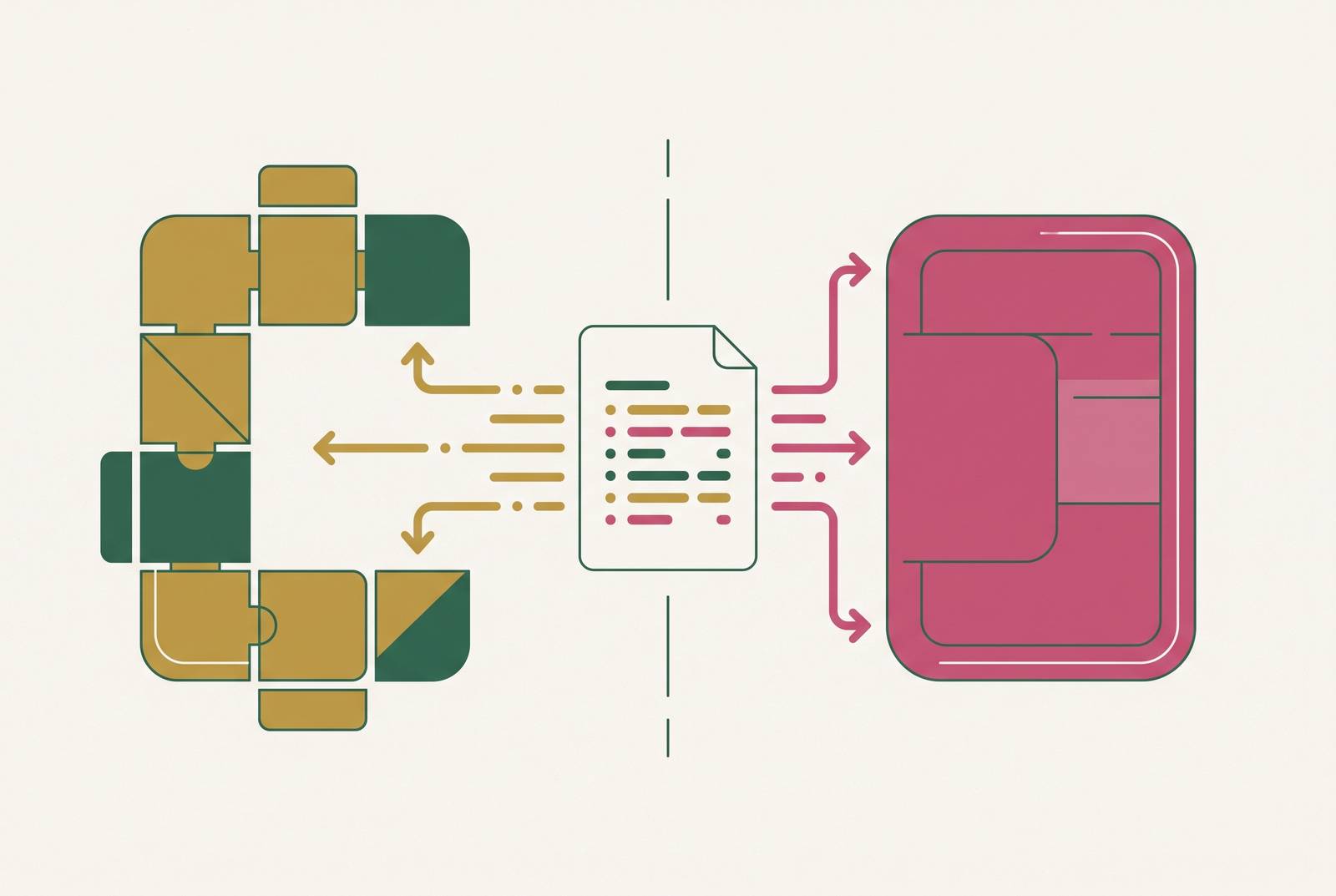
Choosing between open-source and commercial document extraction tools is an engineering decision. It comes down to three measurable variables: accuracy on the actual document layouts a team processes, the total infrastructure cost across the system's full lifecycle, and the engineering time a pipeline consumes once it's running in production.
Why the open-source vs. commercial framing misleads engineers
Teams that treat this as a values question tend to fixate on license cost, which is zero for open-source tools, and stop looking before they find the two costs that actually decide the outcome: infrastructure and engineer time. A license fee of zero says nothing about what it costs to keep a parsing pipeline running against real documents for three years, and it says even less about whether the pipeline will still be accurate when a vendor changes an invoice template or a scanner firmware update shifts resolution. A secondary distortion: benchmark scores measured against clean, curated documents don't predict what happens on a scanned contract, a multi-column research paper, or a long table, so the API that tops a published leaderboard can still perform badly on the specific documents a given team runs through it every day. Benchmark scores on clean, curated datasets often diverge sharply from production performance on real layouts, which is part of why Extend's open-source benchmarks deliberately test against complex, multi-column, and long-array documents instead of the tidy samples that make point-in-time leaderboards easy to win. The rest of this piece works through those three variables in order: accuracy on real-world document layouts, total infrastructure cost across the full lifecycle, and engineering capacity consumed maintaining a pipeline.
Where open-source parsers break structurally
Open-source parsers earn their reputation on a specific kind of document: clean, digitally native PDFs with predictable, consistent layouts. You'll see their failures on scanned pages, multi-column formats, and tables that cross page boundaries, because those failures trace back to how coordinate-dependent extraction works, not to any fixable bug in the code. Five libraries dominate this space, and each one was built to solve a narrow, well-defined problem rather than the general case. PyMuPDF, known as fitz, handles low-latency text, image, and metadata extraction from digitally native PDFs quickly, but it has no OCR capability at all. Tesseract OCR covers a wide range of languages and drops easily into most Python pipelines, but if you don't preprocess the input first, its accuracy falls off fast on low-resolution scans, irregular fonts, and handwriting. Apache Tika supports a wide range of formats useful in mixed-document enterprise pipelines, at the cost of a JVM dependency that adds real infrastructure overhead. pdfplumber offers a clean, readable Python interface for table and layout work, but like Tesseract it has no built-in OCR, so a scanned document run through it produces little or no usable text without a preprocessing step. Camelot runs two parsing modes, lattice for ruled tables and stream for tables separated by whitespace, but it requires hardcoded bounding box coordinates for each document template, so any shift in layout breaks extraction without warning.
Layout models classify text by where it sits on the page, so a field that lands two pixels outside its expected bounding box gets misclassified or dropped before table reconstruction even runs, which is the failure mechanism common to all five tools. Because of that one mechanism, vendor invoices and loan packages fail at the exact point where you'd expect them to be the easiest input a pipeline handles. Table extraction carries the highest share of these failures. Totals rows that span the full table width often get parsed as their own single-cell table, sub-headers embedded mid-table get mistaken for ordinary data rows, and right-aligned numeric columns drift position when a different PDF generator changes how the font renders. Merged cells confuse row-boundary detection in similar ways, causing duplicated or dropped values, and when a column header appears only on a table's first page, most tools lose the mapping between header and column once data continues onto later pages, leaving orphaned rows with no field attribution. A study of PDF parsing across six document categories found that accuracy swings widely depending on document type and layout complexity, with open-source models scoring between 75 and 83 percent on the olmOCR-Bench leaderboard for challenging parsing tasks. The degradation is structural: these libraries extract what the PDF format exposes on the surface, and tasks like layout inference or resolving context across pages sit outside what they were built to do.
The true cost of self-hosting open-source extraction, past the license
The license for an open-source parser costs nothing. Everything downstream of that license, infrastructure and engineering time, costs real money, and those costs appear on a schedule most teams don't plan for when they first commit to a pipeline. Infrastructure spending at modest scale adds up fast, but the bigger number is engineering time: 20 to 30 percent of an engineer's quarter can go into dependency management, resolving version conflicts, and writing custom preprocessors for edge cases the base library was never trained to handle. That figure does not include the time spent debugging a pipeline after a new document template quietly breaks extraction in production.
Volume changes this math. In hybrid setups, where open-source models handle the bulk of routine, predictable traffic, the marginal cost per page approaches zero once the hardware is already running, which makes self-hosting genuinely competitive at high volume. Below a certain monthly page count, though, the full cost of ownership, infrastructure plus engineering time plus the manual correction that fills in where extraction fails, typically runs higher than what a managed API would charge for the same volume; above that threshold, the comparison can flip in the other direction. Commercial API pricing has also moved by large factors in recent periods, so any cost comparison anchored to a specific price point has a short shelf life no matter which direction it points. Cost analysis here depends on knowing a team's actual volume, its engineering capacity, and the terms of its license, not on memorizing a number from a blog post that may already be out of date.
The volume threshold where self-hosting starts to pay off is also the point where it's worth revisiting the tradeoff between accuracy, cost, and latency together, because hybrid setups that combine open-source and commercial APIs let a team control every point on that curve instead of locking into one approach for every document type that comes through the pipeline. At scale, you can shift that cost curve substantially by layering a specialized extraction API on top of open-source preprocessing for routine traffic, but the work is in knowing where your actual document volume crosses the line where managed infrastructure gets cheaper than the engineering overhead of running everything in-house.
Where fine-tuned open-source models beat commercial APIs
Open-source has its strongest case when a team controls both the training data and the schema. Under a fixed budget for adaptation, on a schema that stays narrow and stable, fine-tuned open-source vision-language models can outperform every zero-shot commercial system on extraction accuracy, and that result deserves to be taken seriously by any team with the right document profile for it.
A study by researchers at John Hancock tested a range of systems, commercial vision-language models, reasoning models, and open-source vision-language models in both pretrained and fine-tuned form, against a held-out pool of documents. Fine-tuning on a few thousand samples lifted the best open-source models above an F1 score of 0.98, and that beat every zero-shot commercial system tested on that task. Among the commercial systems, GPT-5 led the pool on F1 but still landed below the fine-tuned open-source ceiling on this task, and Claude Sonnet 4.5 collapsed specifically on the Date field, dragged down almost entirely by that one column even as its performance on other fields stayed strong.
Fine-tuning carries a real cost of its own. The study estimates a substantial fixed, one-time cost for labeling and engineering at pilot scale rather than an ongoing per-page charge, which changes the shape of the decision for a team doing the long-run math on its own volume. The limitation that matters most is that fine-tuning doesn't generalize across layout variability: a model trained on a specific schema for bank checks won't transfer to a different form type without retraining from scratch, which makes this approach practical only for teams with a narrow, stable schema and predictable volume to justify the upfront labeling cost.
How governance requirements eliminate options before accuracy testing
Governance can decide the outcome before you even weigh accuracy or cost. If a regulated environment requires data residency, you can eliminate every cloud-hosted commercial API from consideration no matter how well it scores on a benchmark, so only self-hosted open-source or self-hosted commercial deployment remain. The John Hancock study applies a locality constraint: once on-premises data residency is required, every commercial API candidate in the study, including GPT-5, GPT-4.1, OCR+GPT-4.1, Azure Content Understanding, and Claude Sonnet 4.5, is removed from consideration before anyone evaluates accuracy. Once that constraint is in force, you stop asking which API scores highest on a leaderboard and start asking which approach you can deploy inside the infrastructure perimeter the compliance team actually allows.
Residency is only the most visible governance requirement. Compliance teams in regulated industries also expect per-field traceability, so that every extracted value links back to its exact location in the source document, and auditability, so a reviewer can reconstruct how a value was produced rather than just see what value came out. Retention rules often call for zero data retention on sensitive workloads, and you also need audit logs and version history that satisfy HIPAA, GDPR, and SOC 2 change-tracking requirements. Human-in-the-loop review, the ability to flag and correct low-confidence values before they move downstream, is frequently required as well. Schema versioning gets treated as a developer convenience more often than it should be, when in practice it's the only way a team can show an auditor that its extraction logic stayed stable across the period under review. For teams in financial services, healthcare, and legal work, an API that returns readable text but not schema-defined JSON with per-field citations won't satisfy an auditor, no matter how high its raw accuracy score runs.
What production benchmarks measure, and how benchmark choice determines which vendor wins
The benchmark you pick decides which vendor looks best before you process a single document, because accuracy varies sharply across document domains, and a leaderboard built around one domain tells you little about performance in another. Several open evaluations exist as of mid-2026, and each one measures something different. OmniDocBench v1.6 serves as the primary open-source OCR leaderboard, with TeleOCR currently leading and PaddleOCR-VL, a comparatively compact model, ranking third, while a much larger model scores notably lower on the same test, a result that shows parameter count isn't what determines performance here. The olmOCR benchmark instead emphasizes diversity of input across seven category splits, covering old scans with degraded ink, tiny text, dense-math ArXiv papers, multi-column layouts, tables, headers and footers, and old scans combined with math. Mistral OCR 3 scores well on average across that benchmark but degrades sharply on old scans specifically, which illustrates how steep the drop-off can get on legacy document types even for a model that looks strong on paper. ExtractBench, published in July 2026 under the identifier arxiv:2607.29677, draws on a large corpus of enterprise documents spanning thousands of pages, eight business domains, dozens of document types, and more than twenty challenge tags. It scores value accuracy, record completeness, grounding at both the word and page level, and cost per page together, and it stands out as the only benchmark among these that penalizes truncated record lists instead of simply ignoring them. RealDoc-Bench measures parsing quality against a large set of real-world document samples, and Extend's Parse 2.0 has posted strong results on both layout accuracy and document question-answering output within it.
Vendor-published benchmarks are self-selected and rarely get independently replicated, so the sounder practice is to run a team's own documents through each candidate API against a labeled test set before committing to one. Silently dropping rows during large-array extraction is a serious failure mode that most accuracy benchmarks fail to penalize. A system that completes nearly every run correctly but drops every row on its final document shouldn't score the same as a system that completes all of them. Commercial vision-language models tested in ExtractBench perform well on short documents but often truncate record lists once documents get long, and that failure mode, quiet truncation on long documents, is often exactly the one standard benchmarks fail to catch. Before you trust any published score, check whether a vendor tests against real compliance documents rather than curated samples, check what the benchmark does when a run fails outright, and run the comparison against your own documents before you decide.
How the decision plays out differently
A team processing clean, digitally native invoices at low volume, with no residency requirement, can likely run PyMuPDF or pdfplumber in-house and spend little beyond engineering time on maintenance. A team with a narrow, stable schema, such as bank checks, and the budget to label a few thousand samples has a real case for fine-tuning an open-source vision-language model like Qwen2.5-VL-7B, which reached an F1 of 0.985 with zero JSON parse failures in the John Hancock study. A team bound by a data residency requirement has no choice at all regardless of accuracy scores, demonstrating how governance constraints can eliminate entire classes of options before accuracy is even tested: commercial cloud APIs are out of contention before the evaluation starts, and the decision narrows to self-hosted open-source or self-hosted commercial deployment. A team processing long, variable documents at high volume, where truncation and dropped rows carry real cost, needs a benchmark like ExtractBench that actually penalizes those failures, not one that scores only on clean samples and lets the hard cases pass unmeasured. None of these are the same decision, and no single API or library wins all four. The variables, accuracy on real layouts, full lifecycle cost, engineering time, and governance constraints, determine which answer fits a given team, and the only reliable way to apply them is against that team's own documents and its own volume, not against a leaderboard built for someone else's.