Vendor Lock-In Risk in Document AI Platform Selection
Proprietary parsing and schema lock teams into platforms faster than they realize.
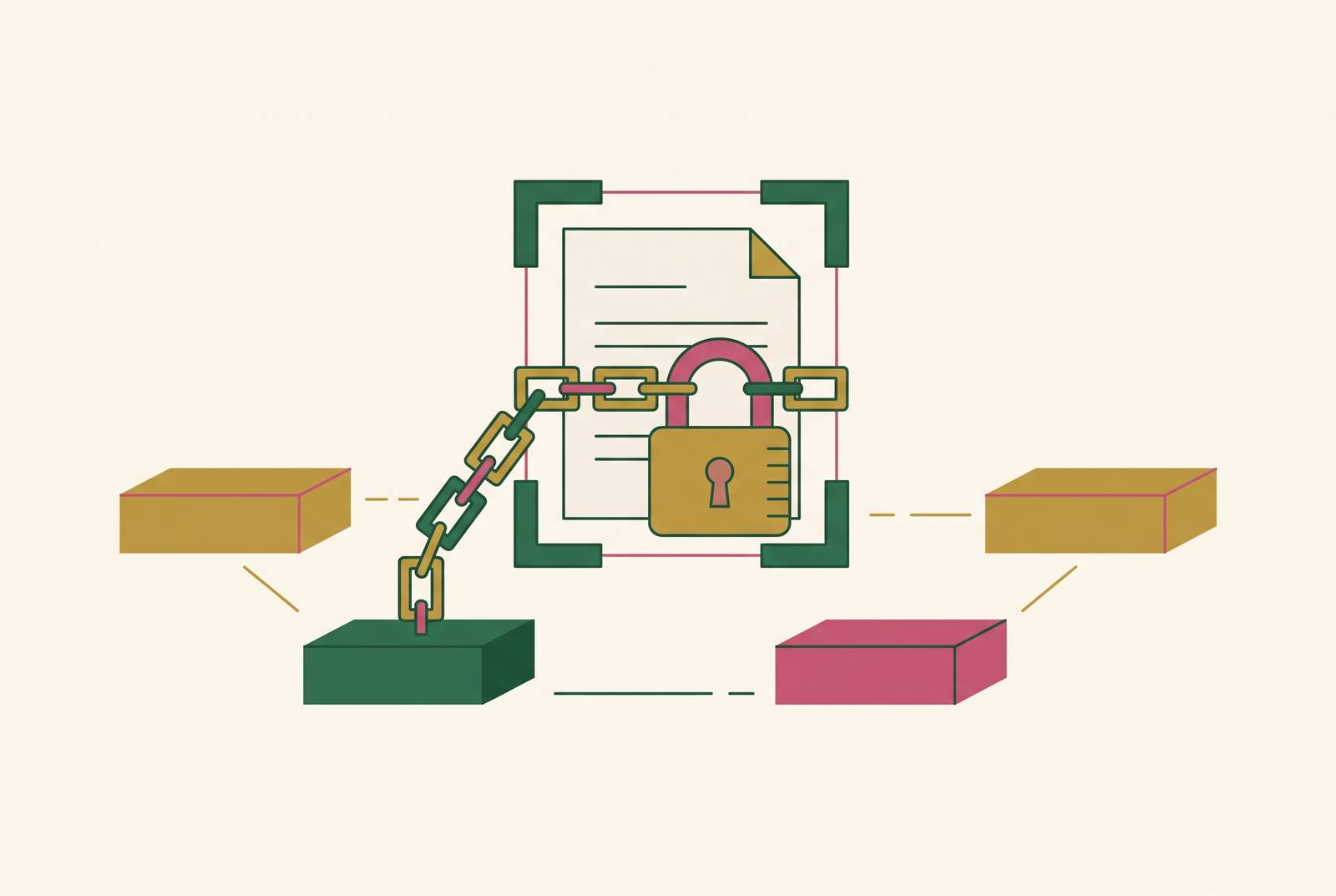
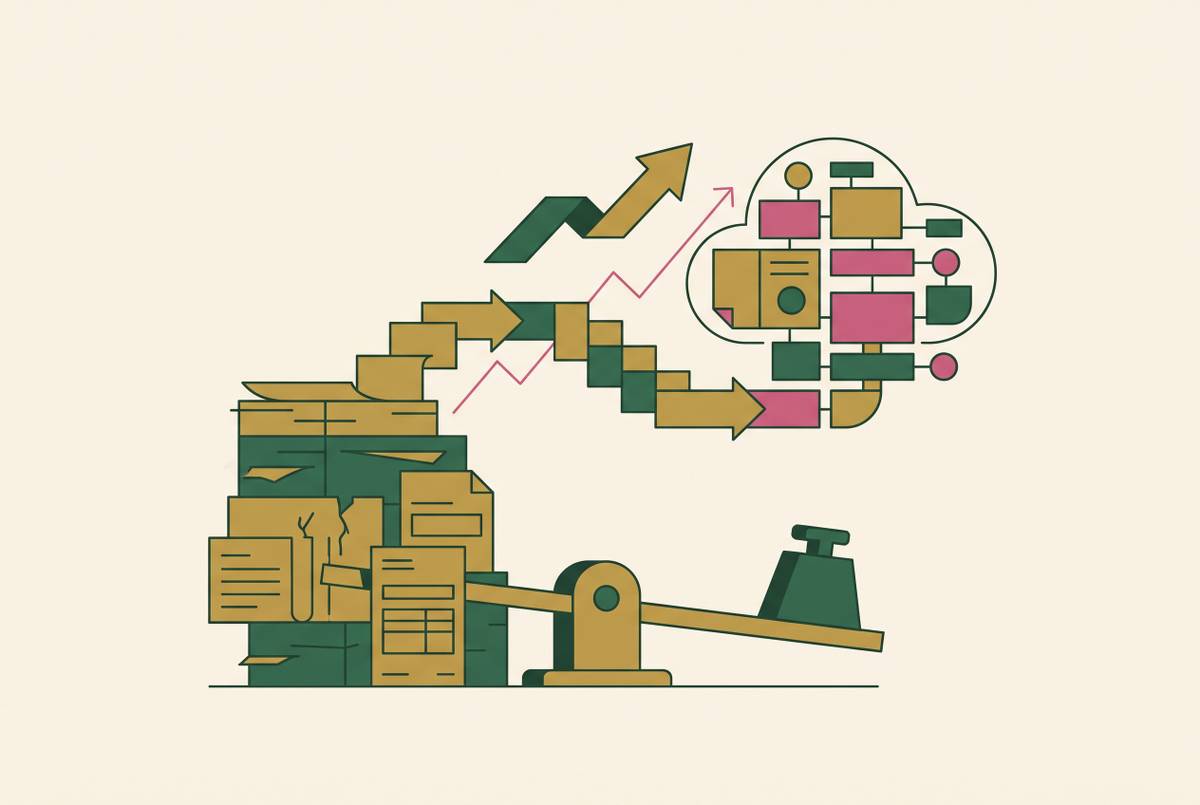
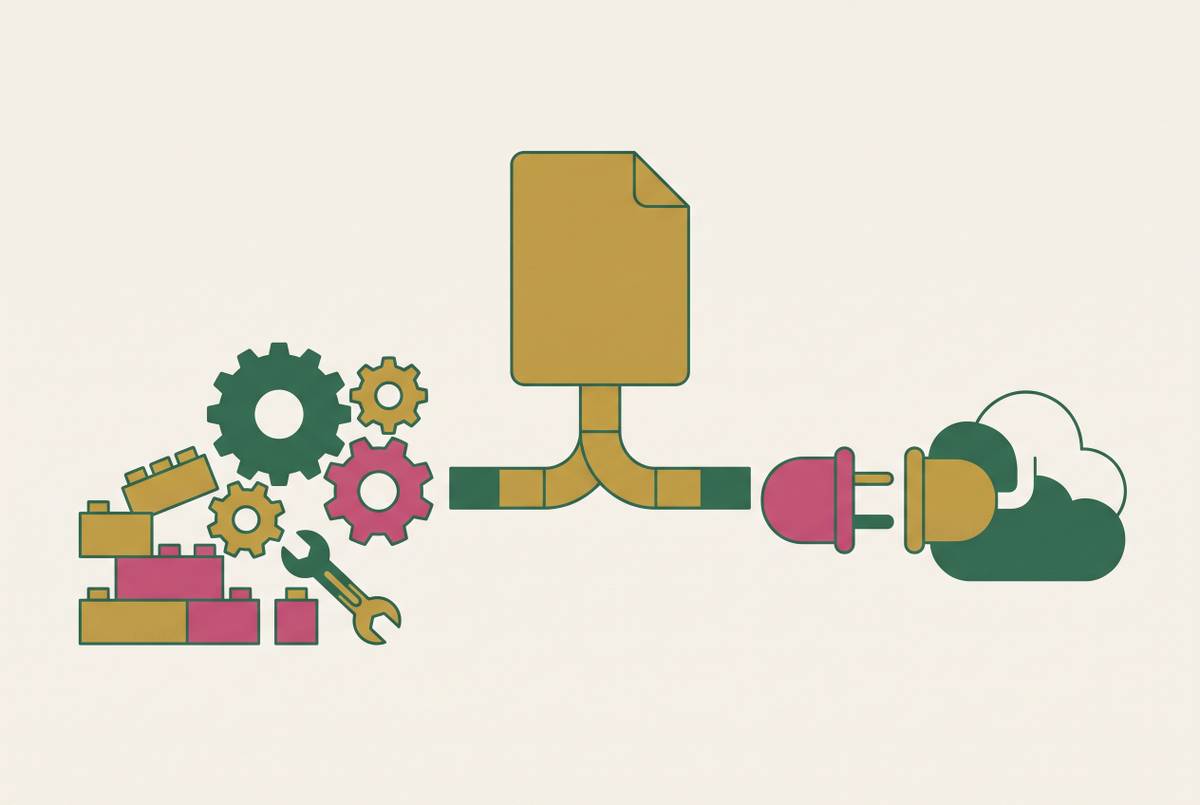
Being locked into a CRM is an inconvenience: migrating records is tedious, but the data itself moves, and the new system functions the day it arrives. Being locked into a document AI platform is different. The dependency is the parsing behavior, schema conventions, and workflow logic itself, and none of it transfers even when the raw data does.
Traditional software lock-in is primarily a migration and cost problem. Document AI lock-in carries a capability risk on top of that: proprietary extraction behavior, confidence calibration, and trained model quirks shape downstream agent outputs in ways a replacement platform cannot immediately replicate. Bright et al., writing in the ITEA Journal in 2026, define lock-in as the condition where switching costs become prohibitively high, creating dependencies that limit competition and innovation. They apply this explicitly to AI procurement contexts where proprietary architectures and data formats are the mechanism.
The problem is accelerating. Agentic document workflows add orchestration logic, tool routing, and memory to the dependency stack, so a platform that was safe to adopt for single-step extraction becomes structurally entangling once embedded in a multi-step agent pipeline. The strongest objection to all this is practical: teams should reach production on any stable platform before optimizing for portability, because premature abstraction adds engineering overhead most teams cannot sustain. The answer is that lock-in accumulates silently during the production build phase. By the time portability matters, the cost to exit has already compounded.
How lock-in in document AI operates across five compounding layers, not one
Document AI touches parsing, extraction, schema design, compliance evidence, and agentic orchestration simultaneously. Lock-in therefore accumulates at each layer independently. Teams that evaluate only one or two layers underestimate total exit cost by a wide margin.
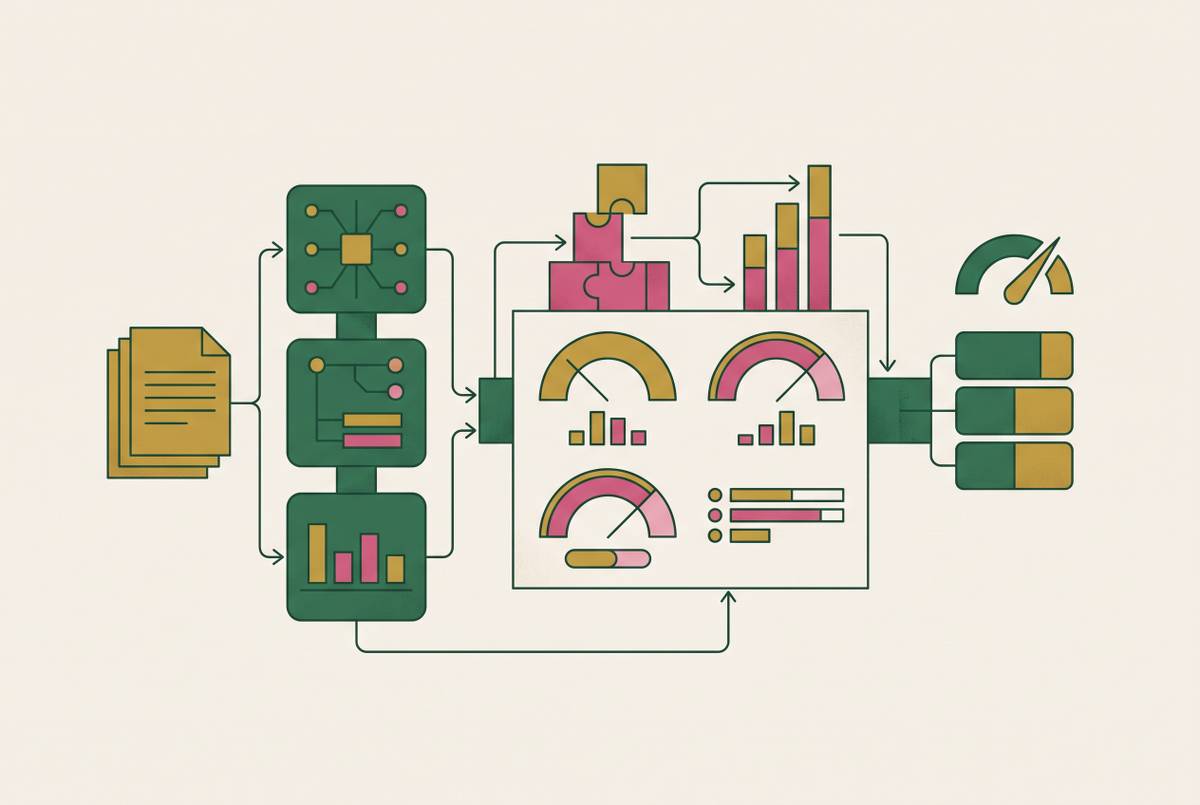
The five layers are these: API format and parsing behavior. Extraction schema and output conventions. Confidence scoring and evaluation infrastructure. Compliance and governance evidence. Agentic workflow coupling. Each creates a distinct switching cost. The layers are also additive and interacting: schema lock-in, for example, is cheaper to escape if parsing behavior is portable, but the combination makes exit much harder than either alone.
Bright et al. identify technical, commercial, operational, and strategic dimensions of vendor lock-in and argue that comprehensive guidance must address all of them. That framing maps directly onto the layered structure developed here. Yet most evaluation frameworks used in procurement audit only the contract layer, which is the least painful one. The deeper technical and governance layers go unexamined until a migration is already underway.
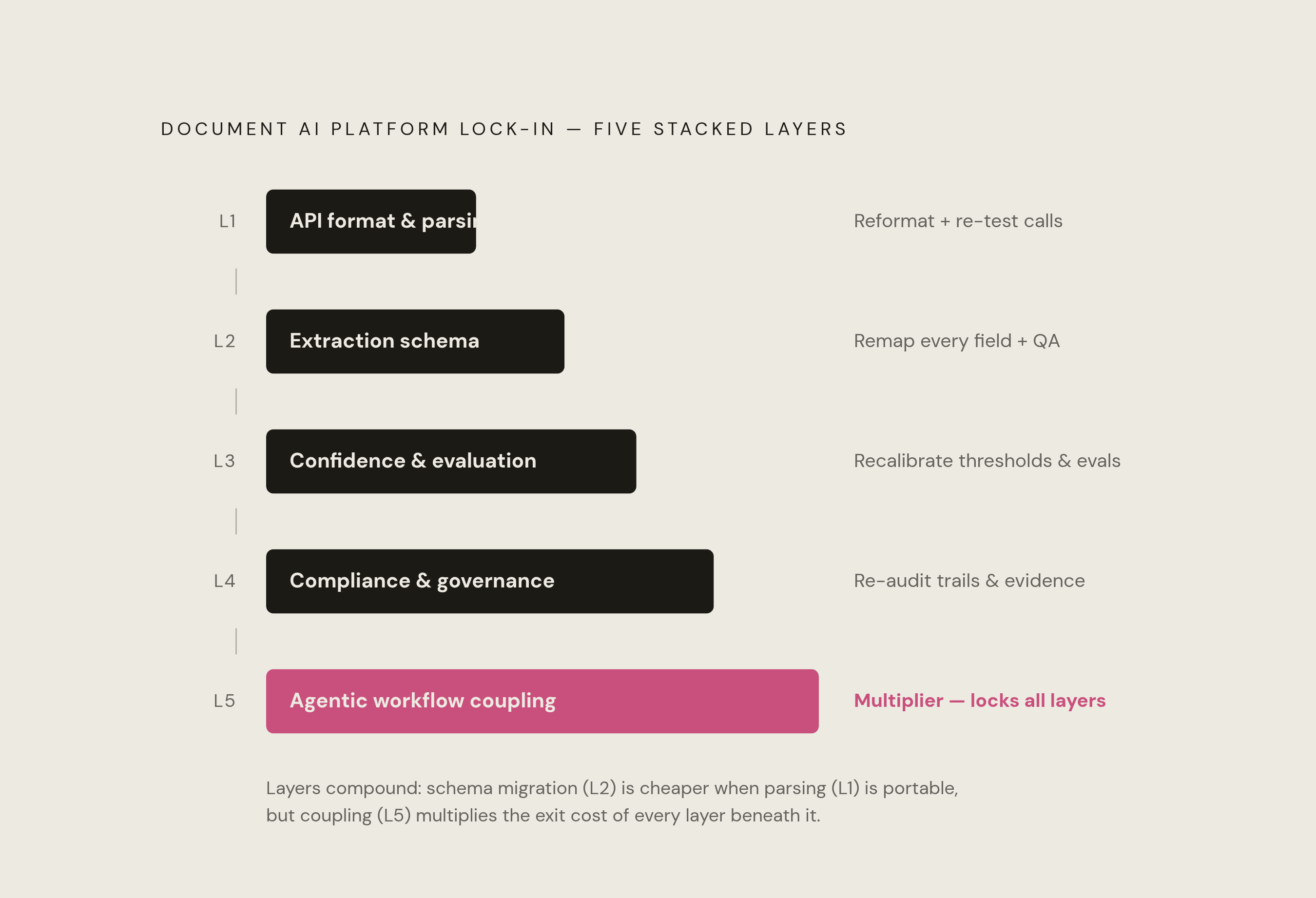
Layer one: API format and parsing behavior as the foundation of downstream dependency
When a team's document pipeline is built around one vendor's parsing output, every downstream component inherits that vendor's assumptions. Bounding box conventions, reading-order decisions, table representation, and page-segmentation logic all flow upward into whatever consumes the parsed result. Change the parser, and everything above it breaks.
Parsing behavior is not standardized. How a vendor segments multi-column layouts, handles handwritten fields, represents merged table cells, or orders text across a complex page are implementation choices, and no two vendors make the same ones. A team that benchmarks a vendor on clean samples and builds around that output will face different behavior on production documents, because accuracy on complex documents varies significantly with document quality and layout. The same model can score very differently on clean digital invoices than on scanned receipts.
The open-source OCR benchmark OmniDocBench, presented at CVPR 2025, offers a way out of this trap. It evaluates four major parsing modules, text, tables, formulas, and reading order, using Normalized Edit Distance, tree-structure similarity (TEDS), Character Detection Matching (CDM), and BLEU. If you specify performance requirements in these terms, you get a vendor-neutral evaluation standard instead of a vendor's proprietary accuracy claim.
The hidden cost comes from work already done. Teams that invest in prompt engineering or post-processing code tuned to one vendor's parsing quirks accumulate switching costs that only surface when they need to move. The mitigation is to require vendors to expose parsing outputs in a documented, stable schema, test parsing on the actual document types in production rather than synthetic samples, and evaluate against a neutral benchmark methodology before committing.
Layer two: extraction schema and output format as accumulated intellectual property that cannot leave
Extraction schemas represent accumulated domain knowledge. Which fields to pull from which document types, how to handle missing values, how to map vendor-specific terminology to internal data models: all of this encodes years of edge-case handling that a new vendor's default extractor will not replicate. A healthcare team's extraction schema for prior authorization forms, or a finance team's field mappings for invoice processing, is real institutional knowledge. It rarely ports in a form a replacement platform can consume without significant reconstruction.
The problem extends to the contract itself. Clauses that grant data export rights rarely specify machine-readable format requirements or cover workflow configuration. The customer owns the data in name but cannot operate with it on a different platform. The schema exists as configuration inside a proprietary interface, and that configuration is functionally stranded.
The mitigation is to define extraction schemas in an open, version-controlled format outside the vendor's UI. The vendor should be required to accept schema definitions via API, not only through a proprietary configuration interface. And before signing a multi-year contract, a team should test schema import on a candidate replacement platform to confirm that the accumulated knowledge can actually move.
Layer three: confidence scoring and evaluation infrastructure as invisible switching costs
A team that has tuned automation thresholds around one vendor's confidence scores cannot carry that calibration to a replacement platform. Confidence scores are model-specific, and they drift in production even within the same platform. The thresholds that decide which extractions proceed without review and which escalate to a human are built on a signal that shifts under the team's feet.
An uncalibrated model may report high confidence on extractions that are frequently wrong. A team that builds threshold-based automation without validating calibration is automating errors at scale, not catching them. Confidence scores are optimized during training and drift in production. A vendor that retrains or updates its model can silently shift the meaning of a 0.9 confidence score without the customer knowing, making historical thresholds unreliable.
The evaluation infrastructure a team builds is tied to one vendor's output format. Test document sets, labeled ground truth, accuracy metrics, and regression suites all embed that vendor's schema and confidence signal. Migrating to a new platform requires re-running evaluations from scratch against the new platform's schema. The mitigation is to maintain evaluation test suites in a vendor-agnostic format, require vendors to expose calibration metadata alongside confidence scores, and run any candidate replacement platform against the same labeled test set before transition.
Layer four: compliance and governance evidence trapped inside vendor-managed systems
Audit logs, model versioning records, incident response documentation, and AI system technical documentation generated inside a vendor's compliance tooling are often inaccessible in exportable form. A team that exits the vendor also loses the evidence it needs to demonstrate regulatory compliance for work already done. The EU AI Act makes this concrete. Organizations deploying high-risk AI systems must maintain Annex IV technical documentation covering training data provenance, system architecture, performance metrics, and a post-market monitoring plan, available to regulators on demand. If that documentation lives inside vendor-managed systems, an exit creates a compliance gap that predates the exit itself.
Governance evidence lock-in is silent during normal operations and surfaces catastrophically during an audit or a distressed vendor exit. That makes it uniquely difficult to discover through routine due diligence. The mitigation is contractual: require export of all compliance-relevant logs in a machine-readable format on a scheduled basis, not only at termination. Treat HIPAA BAA availability, SOC 2 certification, and zero data retention policy as table-stakes requirements, not differentiators. Verify that audit trail exports include the metadata regulators require, not just raw log files.
Layer five: agentic workflow coupling as the lock-in multiplier that makes every other layer harder to exit
Once a document AI platform is embedded in an agentic workflow, swapping it requires rebuilding far more than the extraction layer. Routing decisions, downstream tool calls, memory structures, and agent skill templates are built around the platform's specific output format and latency profile. Every agent component that depends on that output has to be reconstructed.
Stack-level lock-in grows fastest in agentic deployments. The model layer may become interchangeable, but the orchestration logic, routing rules, and agent memory structures built around one platform's output do not move with it. The Legal Stack identifies workflow logic, automated intake, routing, and approval chains, as a layer for which zero vendor agreements include portability guarantees. That logic is functionally stranded at termination: a replacement vendor has to rebuild it, not import it.
The "checking problem" is acute in regulated-industry agentic pipelines. A July 2026 paper (arXiv:2607.28666) tested document-heavy workflows across multiple model families and tool configurations and found that a meaningful share of configurations that cleared a demonstration bar failed a production bar requiring sustained accuracy, reproducibility, verifiable attribution, and a confidence signal that carries information. The production bar is set by the surrounding system harness, not the model alone.
One concrete failure mode illustrates the risk. Silently dropping rows in large-array extraction is an error that single-result accuracy benchmarks do not penalize, yet a downstream agent that trusts extraction completeness will act on an incomplete record without knowing it. Agentic coupling amplifies extraction errors of exactly this kind.
The mitigation is to use agent skill templates and orchestration logic defined in open, vendor-agnostic formats. The document AI platform should be required to expose a Model Context Protocol server or equivalent standard interface so agent frameworks are not hard-wired to one vendor's tool-calling convention. And workflow automation depth should be scoped to only what is proven in production before signing terms that reward deeper integration.
How to audit a document AI platform against all five layers before committing
A platform evaluation that covers all five lock-in layers requires different questions at each stage, technical, contractual, and operational. The order matters: parsing portability sets the floor, and agentic coupling sets the ceiling of total exit cost. For the parsing layer, require the vendor to demonstrate parsing accuracy on the buyer's own document types using a neutral benchmark methodology, OmniDocBench metrics or equivalent. Never accept a single-number accuracy claim on curated samples as a proxy for production behavior. For the schema layer, verify that extraction schemas can be defined, exported, and imported via API in an open format. Test whether a candidate replacement platform can consume the schema without reconstruction.
For the confidence and evaluation layer, require the vendor to disclose calibration methodology and document how confidence scores behave under model updates. Maintain an independent labeled test set and re-run it against any candidate platform before transition. For the compliance evidence layer, map every compliance-relevant log and documentation artifact the platform generates. Confirm contractual export rights in machine-readable format on a scheduled cadence. Verify that SOC 2, HIPAA, and GDPR certifications cover the specific data flows in scope, and that self-hosted or zero-retention deployment options exist for sensitive document types.
For the agentic coupling layer, inventory every workflow component that depends on the platform's output format, latency profile, or tool-calling convention. Assess whether the platform exposes standard interfaces such as an MCP server or open SDKs that decouple agent logic from vendor-specific behavior. Scope integration depth to what is proven before you sign terms that reward deeper coupling.
Bright et al. recommend a phased implementation roadmap, containerization, open standards adoption, and Infrastructure-as-Code, alongside procurement reforms such as modular contracting, as the structural approach to maintaining platform independence at operational scale. The same phasing logic applies to document AI procurement. The EU Data Act framework, applicable from 12 September 2025, provides a ready-made contract checklist: exhaustive data and asset portability lists, a maximum two-month notice period, a maximum 30-day transitional period, and switching charges capped at direct cost until 12 January 2027, then entirely banned. Legal teams can use these provisions as a negotiation floor even outside EU jurisdictions.