Model Selection Tradeoffs in Document AI Infrastructure
System architecture determines which model matters, not benchmark scores alone.

An engineer runs a benchmark comparison, picks the model with the highest score, and ships a pipeline, but it still fails in production within weeks. That sequence repeats across the industry because the default instinct when building a document AI pipeline is to start with a model benchmark and work outward from there, treating model choice as the first decision rather than the last. That instinct gets the dependency backwards. The surrounding system architecture determines which model properties actually matter in production, so the model comparison that feels like the natural starting point is, in most cases, premature. Document AI is not a single-model problem: a canonical production pipeline runs through parsing, chunking, extraction, validation, and agent handoff as distinct stages, and a failure at any one of them compounds every stage that follows. A model that tops a public leaderboard can still be the wrong choice if the system around it cannot exploit what that model does well or cover for what it does poorly, and the rest of this piece works through why that is true at every layer of the stack.
The right model for a document processing pipeline is not determined by benchmark rank but by the architecture surrounding it, because the surrounding system defines which model properties actually matter in production. The first decision is which paradigm fits the document population: classic OCR for clean, uniform, printed documents; hybrid OCR+VLM parsers when layouts vary or content is heterogeneous; fully agentic reasoning systems only when extraction tasks require multi-step reasoning that cannot reduce to a fixed field set. Within whichever paradigm is chosen, the binding constraint shifts by layer, accuracy on complex layouts at parsing, field-level accuracy at extraction, latency and confidence reliability at validation, so a model well-matched to one layer is frequently the wrong choice for another. Model selection is the last decision, made after the pipeline architecture, the document distribution, and the failure modes a team is willing to defend against are all already settled.
How production document pipelines are structured
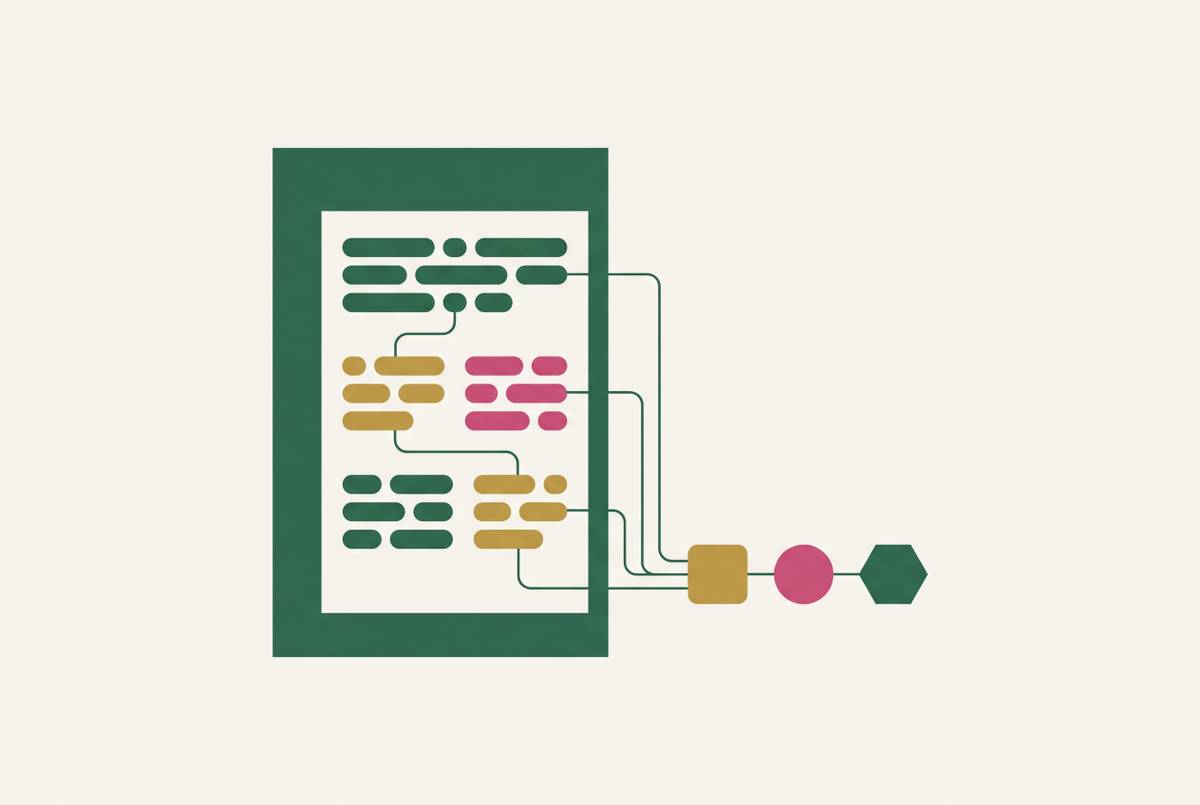
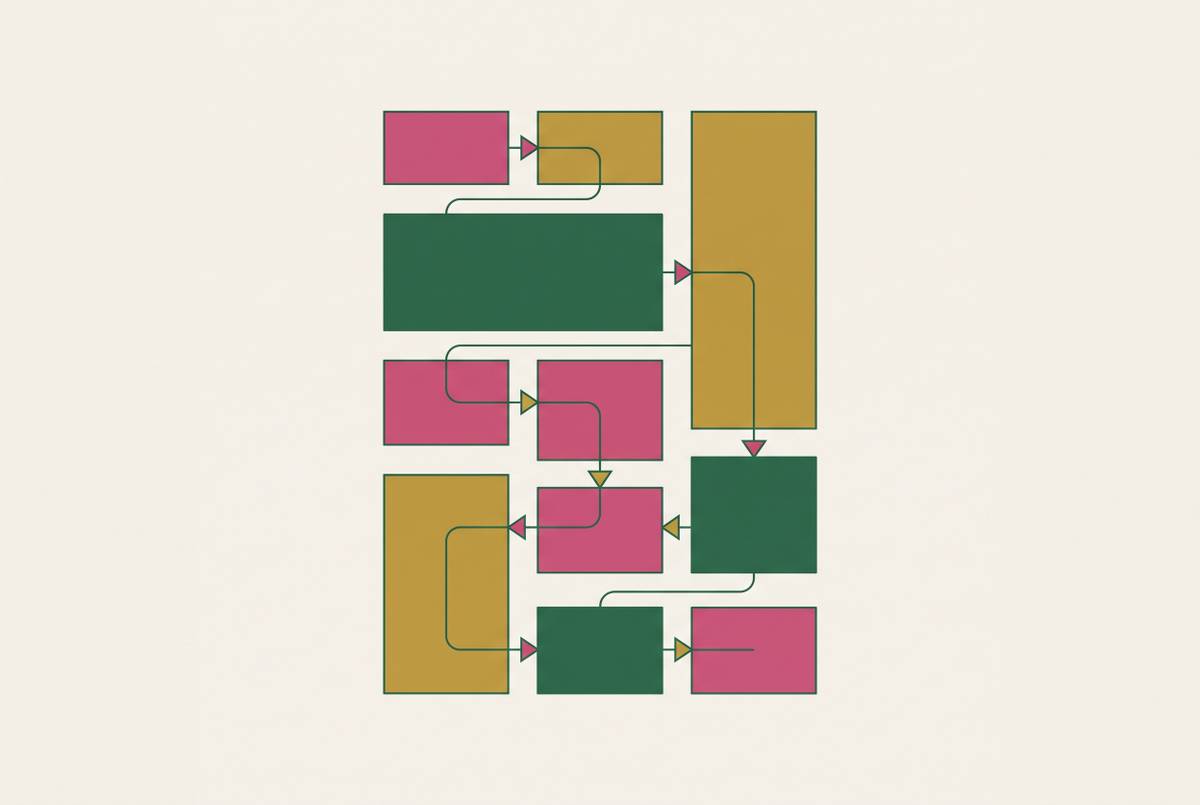
Production document AI systems are staged architectures, and each stage carries its own failure modes, so no amount of model quality can repair that on its own. Picture the pipeline as a sequence of distinct handoffs rather than a single black box that takes in a document and returns an answer.
Ingestion sits first, and it has to handle whatever format arrives: scanned PDFs, photographs taken on a phone, digital documents exported cleanly from another system, email attachments of every quality level, each with its own noise profile. Parsing and OCR come next, converting page images into structured text, and this is the stage where the choice between classic OCR, hybrid OCR+VLM systems, and end-to-end vision-language models actually gets made. Layout analysis and splitting follow, handling multi-page document classification, stitching text across page boundaries, and detecting where one section ends and another begins, each of which can be serviced somewhat independently of the stages around it.
Extraction comes after that, where a language model pulls specific fields out of the structured text, and the chunking strategy chosen here (hierarchical for multi-page contracts, semantic for heterogeneous document sets, fixed-size for uniform corpora) drives the quality of everything retrieved downstream. Validation and confidence scoring form the gate between what the automated system produces and what a human or an agent is allowed to act on. Agent handoff is the final stage, where the system's output becomes someone else's input, and in regulated workflows, if an error reaches this point, it carries financial and legal consequences rather than just an engineering inconvenience.
The agentic shift gets talked about as though it has already arrived everywhere, but its adoption is uneven across organizations that have automated some parts of the chain while leaving others untouched. A form gets filled out automatically by a model, and then a person manually retypes that data into a second system, and then another person reviews the entry a third time before it moves forward. That sequence is an architecture failure, because nobody redesigned the handoffs once the document step got automated. Real-time document AI makes this even more visible, since handling new document variants without a batch retraining cycle, triggering work off events rather than batch jobs, and running parallel processing pipelines are all decisions that have to be made at design time, not patched in after the model is chosen.
Which architectural paradigm should I choose for document processing?
Document processing today runs on three competing architectural bets, not three tiers of the same model category: classic OCR pipelines, hybrid OCR+VLM specialized parsers, and fully agentic reasoning systems, and each one embeds a different set of tradeoffs that an accuracy score by itself will never reveal. Choosing among them commits a system to a shape before any specific model gets evaluated within that shape.
Classic OCR pipelines reach high accuracy on clean printed text, run deterministically, and cost little per page. That is why they remain the backbone of countless document systems. Their weakness is structural rather than incidental: the chain runs through recognition, text cleaning, natural language processing, and extraction as separate steps, and each step compounds whatever error the step before it introduced. That chain breaks down on handwritten text, stamped annotations, tables, and varied layouts, and performs close to zero on tables and math once documents stop looking like the clean templates OCR was built for. The paradigm earns its place when documents are clean, printed, and structurally identical every time, and the more uniform the document population looks, the more OCR becomes the obviously correct choice.
Hybrid OCR+VLM specialized parsers take a different bet. Rather than running a long chain of discrete steps, they collapse the process into fewer stages, letting a vision-language model read a page image directly, text, layout, tables, and structure together, in a single pass. The payoff appears on complex, real-world documents, where accuracy lands materially higher than classic OCR achieves, and the system adapts to layout changes without anyone rebuilding a template. The cost of that adaptability is real and steep: per-page inference cost runs higher than OCR, and independent benchmarks on legal contracts show a wide spread in accuracy across specialized parsers for a large multiplier in cost. This paradigm fits documents when layouts vary, when content is heterogeneous, or when the extraction must preserve meaning even at the cost of exact characters.
Fully agentic reasoning systems make the most ambitious bet of the three. Rather than matching patterns the way OCR and hybrid parsers do, these systems reason through a document the way a subject-matter expert would, which suits complex, multi-step extraction tasks that do not reduce to filling in a fixed set of fields. That capability carries the highest inference cost and the highest latency of the three paradigms, and it introduces a production concern that neither of the other paradigms shares in the same way: a general-purpose model that performs accurately with tools on one task type can still fabricate a field value on another task type entirely. The architecture chosen here determines which hallucination surface actually gets exposed. Grounding errors produce a wrong field value pulled from the document itself. Parametric errors occur when the model "knows" an answer from its training that contradicts what the document actually says. Citation errors misattribute a value to the wrong source passage. Each of these three failure types behaves differently depending on how the surrounding system is built, so the choice of architecture is also a choice about which failure mode a team is signing up to defend against.
None of the paths forward from here are simple model upgrades. End-to-end vision-language models may eventually replace the OCR step outright, simplifying the pipeline at the cost of higher per-page inference spend. Retrieval-augmented approaches can cut that cost by processing only the pages that matter out of a large collection rather than every page uniformly. Efficiency-optimized models may eventually shift the cost-accuracy curve enough to make VLM-only pipelines viable at real scale.
What benchmarks measure
Public benchmarks measure how well a model parses documents drawn from that benchmark's own distribution, not how reliably it will perform on the specific documents a given production system has to process, and the space between those two things is exactly where model selection decisions go wrong.
RealDocBench, published on arXiv in June 2026, illustrates what a benchmark built for production relevance actually looks like. It runs two tracks: a large set of field-level questions drawn from hundreds of real regulated documents across mortgage, finance, supply chain, and medical and healthcare domains, alongside thousands of human-verified page images carrying COCO-style bounding boxes. Rather than scoring parsers on string similarity, which rewards a system for getting the general shape of a page right, it scores on field-level accuracy, meaning whether the system pulled the correct value for a specific field off a messy real-world page. It reports per-page cost and cache-busted latency alongside accuracy for every system it evaluates, which keeps the benchmark from becoming a pure accuracy leaderboard divorced from what running the system actually costs.
Most of the numbers circulating in the market come from vendors measuring their own systems on documents chosen to flatter those systems, so a published accuracy figure often says more about the test set than about the model. Model versioning compounds that risk. The BusinessWareTech IDP benchmark recorded one model's invoice processing accuracy improving from 2025 to 2026 while a competing model's accuracy declined over that same stretch, a pattern that shows a routine version upgrade can silently degrade a production workflow that depended on the older version's behavior. If testing is independent and runs against documents that actually resemble a team's production population, it can catch that kind of regression before it reaches customers.
The practical consequence for engineers picking a model is to match the benchmark's document distribution and metric to the production task before trusting any of its numbers. Evaluating a model against OmniDocBench and then deploying it against regulated mortgage documents is a category error, because the benchmark was never built to represent that document population or the regulatory stakes attached to getting a field wrong.
The accuracy-latency-cost tradeoff across the pipeline
Accuracy, latency, and cost do not trade off against each other the same way twice. The balance resolves differently at the parsing layer, the extraction layer, and the validation layer, and a model tuned for one of those layers is frequently the wrong choice for another.
At the parsing layer, parsing tends to run asynchronously, upstream of the rest of the pipeline, so latency has time to spare before a downstream stage needs the output. Accuracy on complex layouts, multi-column tables, checkbox grids, handwritten annotations, becomes the binding constraint instead. End-to-end vision-language models that read page images directly simplify this layer but raise per-page inference cost, while retrieval-augmented approaches claw some of that cost back by processing only the pages that matter.
At the extraction layer, the calculation shifts again. Field-level accuracy carries more weight than full-page similarity, because a parser can score well on a markdown-comparison metric while still misreading the one field a downstream agent is actually going to act on. The chunking strategy applied at this layer, hierarchical, semantic, or fixed-size, shapes downstream retrieval quality on its own, independent of which extraction model sits behind it, so the harness surrounding the model determines this outcome as much as the model does. A particularly dangerous failure mode lives here: a system silently dropping rows during large-array extraction, such as table line items, is the kind of error that standard accuracy benchmarks do not penalize, so a production system has to be built to detect and surface that failure rather than trust the benchmark to have caught it.
At the validation and agent-handoff layer, latency becomes visible because end users and downstream systems are now waiting on the result. A fast parser paired with poor confidence scoring generates more expensive exceptions than a slower parser paired with reliable uncertainty signals. In regulated workflows, mortgage underwriting, clinical records, financial reporting, a wrong field value that reaches an agent carries financial and legal consequences, and the cost of discovering a compliance gap after the fact dwarfs the cost of having built a slower, more accurate pipeline from the start.
Three industry cases show how differently this tradeoff resolves depending on where the pressure sits. In healthcare, a home-health organization, Careonix, cut document processing time dramatically per order using Intuz's system, and the value delivered there was the latency gain, while accuracy on the medical order forms themselves was the constraint that determined which model could do the job. In pharma, LEO Pharma automated review of roughly 18,000 SOPs and related documents, freeing an estimated 50 years of human review time worth tens of millions of DKK, and at that scale, per-page cost, not latency, is the binding constraint. In finance, the average invoice takes days to move end to end even though an AI-driven system can process the document itself in seconds, because the bottleneck sits in approvals and exception routing rather than in extraction. That finance example makes the point as directly as any case can: most exceptions in a document pipeline are not extraction failures, and no amount of model improvement touches a bottleneck that lives in the approval chain rather than in the parsing step.
Confidence scoring as a system design requirement
Extraction output without a confidence score attached is operationally blind, because every field a system extracts needs some reliability signal attached to it before a downstream process can safely act on that field, and that signal has to be designed into the system rather than assumed to arrive bundled with the model.
In practice, confidence scoring assigns a numeric certainty value to each extracted field, and fields that clear a defined threshold pass through automatically while fields that fall short get routed to a human reviewer instead. That routing logic is what keeps high-volume throughput intact while still protecting the fields that carry genuine regulatory weight, patient identifiers inside HIPAA submissions, control evidence inside SOC2 audits, cash-to-close figures on a Closing Disclosure, from slipping through unchecked. None of this threshold logic, routing behavior, or reviewer handoff comes from the model itself. It is a system built around the model, engineered with the same deliberateness as the parsing and chunking decisions that precede it, and treating it as an afterthought is how pipelines that scored well on a benchmark still end up shipping unreliable results once they meet production documents.
Sources
- Infinity-Parser2 Technical Report
- RealDocBench: A Benchmark for Field-Level QA and Layout Understanding on Real-World Regulated Documents
- OmniDocBench: Benchmarking Diverse PDF Document Parsing with
- Document Confidence Scores Guide March 2026 | Extend
- Operationalizing Document AI: A Microservice Architecture for OCR and LLM Pipelines in Production